


Miriam Wrobel, Senior Managing Director, Global Leader of Environmental, Social and Governance (ESG) and Sustainability at FTI Consulting outlines how today’s GCs can balance legal risk, reputation, and core values in a deeply divided landscape.
Growing social and political polarisation is having a major impact on society – and the corporate world is no exception. Notably, diversity, equity and inclusion (“DEI”) programs have become increasingly contentious in today’s divided political climate.1
And with a new administration leading in Washington, many organisations are re-evaluating their public commitments and disclosures to avoid legal risk and undue negative attention. Recent actions by the U.S. federal government on DEI and ESG programs highlight an important lesson for firms and how they align these initiatives with their broader strategy and public communications.2
Across the board, companies are facing pressure from stakeholders – governments, regulators, consumers, employees and investors – to act, sometimes in opposing directions. This political and economic landscape presents myriad challenges for anyone trying to navigate it, but organisations with misaligned public policies and core strategies are most at risk.
Fortunately, there is someone uniquely positioned to help: the modern general counsel (“GC”). Trained to think both long-term and short-term, GCs have unique insight into overarching business strategies and risks, empowering them to guide their organisations through uncertainty and polarisation. To do so effectively, GCs must have a thorough understanding of their organisation’s current state, its stakeholders and strategic objectives.
“A GC’s approach can only be as good as the knowledge they have and the governance structures they have established.”
Know Your Company
The first step in navigating this environment is to assess where a company is most exposed in order to most accurately gauge the level of risk it could face. Every company should consider itself under scrutiny – whether it’s from the government, media or other stakeholders. GCs must ask critical questions: What has the company publicly stated about its initiatives? What commitments have been made? Are there any internal communications or actions that could become liabilities if exposed?
GCs may feel as if they know everything their companies or spokespeople have said publicly, but given the size of today’s communications teams and how many decisions are made across an organisation, it’s a difficult task.
A GC’s approach can only be as good as the knowledge they have and the governance structures they have established. And with potentially controversial information in play, they may want to work with trusted partners under privilege when tackling sensitive issues. Once GCs have gathered the information they need, then they can identify where vulnerabilities lie.
Know Your Stakeholders
Understanding the diverse perspectives of company stakeholders is crucial to managing the risks of potentially polarising information. Various audiences, such as regulators, politicians, foreign investors and media, will each have their own concerns and expectations; it’s the duty of a GC to look at the world through their eyes and advise business leaders to forge a strategy and communications plan that takes into account their varying concerns.
Ultimately, given the uncertain and fast-moving nature of business and politics, it’s impossible to make every stakeholder happy all of the time. However, GCs can mitigate the impact of backlash by identifying and prioritising the stakeholders most essential to their business’s long-term success. Not all stakeholders carry equal weight, and prioritising more immediate threats without considering long-term implications (or vice-versa) can end up harming the business.
By effectively conducting this tightrope walk, GCs can help their organisation remain true to its core values and business imperatives while considering the full spectrum of stakeholder interests.
Know Your Business Strategy
Armed with a solid knowledge of their business’s public commitments and stakeholder interests, GCs can then work with the leadership team to construct a strategy that mitigates risk while aligning with the company’s broader goals. GCs are best positioned to examine their business portfolio through a risk lens across multiple time horizons.
GCs must critically examine their organization’s practices. What is the company doing, and how does it align with its overall strategy? Do specific initiatives advance the company’s broader goals, or do they present risks? While some internal teams might seek to react quickly to social and political trends, GCs must consider the bigger picture and inform governance by examining the business holistically and judging risk and opportunity.
At the same time, however, GCs must also guard against various traps. In recent years, for instance, some companies have rushed to address hot-button issues or undertake initiatives to demonstrate corporate social responsibility.3 But they risk appearing superficial or insincere if they waver on such commitments without substantial action, potentially alienating all of their stakeholders. This is especially dangerous when public opinion shifts rapidly, as what may seem like an appealing commitment one year may become a liability in the future.
Ultimately, GCs need to identify what is core to their corporate values and missions and be pragmatic about what ties into their business strategy. Although there’s no one-size-fits-all approach to address risks, GCs should carefully evaluate both short- and long-term business goals. Anything that doesn’t align with the company’s core values or long-term strategy should be reconsidered.
Conclusion
In a world marked by increasing social and political turbulence, GCs play a crucial role in steering their organisations. By ensuring that policies align with relevant legal frameworks and business goals, GCs can protect the company from potential legal and reputational damage.
While being mindful of risk, GCs can unlock a plethora of opportunities and thrive amid uncertainty by fostering thoughtful governance, considering multiple perspectives and prioritising their company’s core mission and values.
Footnotes:
1: Nicquel Terry Ellis, “What is DEI, and why is it dividing America?”, CNN (January 23, 2025).
2: Bruce Crumley, “Anti-DEI Pressure on Federal Contractors Grows as Efforts Target More Private Companies”, Inc. (March 27, 2025).
3: Alison Wood Brooks, Kimin Nam, Maya Balakrishnan and Julian De Freitas, “Research: Speed Matters When Companies Respond to Social Issues”, Harvard Business Review (July 1, 2024).
About the author:
Miriam Wrobel leads FTI Consulting’s global Environmental, Social, and Governance (“ESG”) practice, representing more than 250 professionals across FTI Consulting’s business segments focused on supporting clients across their ESG programs. Ms. Wrobel advises public and private companies and a wide range of investors on ESG evaluation, strategy, and implementation efforts, leveraging her 20 years of transactional and strategic experience and deep background in the energy transition to support the development and execution of multi-pronged ESG and sustainability programs. For more details, please click here.
Miriam Wrobel
Email: miriam.wrobel@fticonsulting.com
Be part of a growing global community committed to advancing in-house legal leadership.
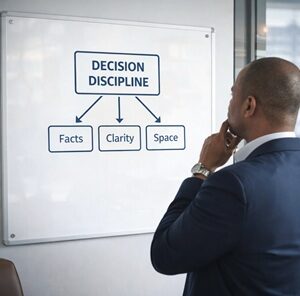
Ekumene “E” Lysonge, Chief Legal Officer, NerdWallet, Inc in the USA, examines how judgment is built before the crisis happens – and why decision discipline...
Learn more about The next generation GC: decision discipline

Thiago Bueno Vaz, Regional Compliance Officer Americas at MANN+HUMMEL Filtration Technology, explores how regulatory expectations around “effectiveness” translate into practical influence inside organisations. When the...
Learn more about Moving compliance from the margins to the centre: an in-house perspective