

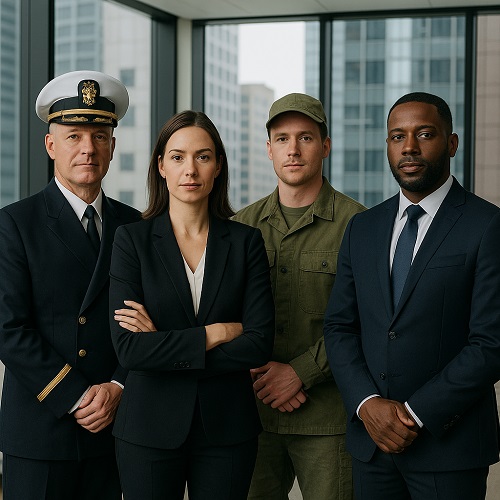
William D. Marcum, Director Legal – AI/Analytics, Legal Tech and OEM at OpenText, shares how military leadership principles translate into high-impact executive success in the corporate world.
Leadership isn’t about titles – it’s about accountability, resilience, and mission-driven results. Few environments test and forge those qualities more intensely than military service.
As a U.S. Navy Veteran, I had the privilege of leading teams in dynamic, high-risk operations long before I entered the corporate world. Today, as an executive legal advisor, I see every day how the leadership lessons from the military directly translate into high-performing, strategic executive leadership.
Here are a few of the most critical ways military leadership shapes successful executives:
1. Mission-First, People-Always
In the military, completing the mission is non-negotiable but you succeed through your people. In corporate leadership, balancing strategic goals with team development is equally essential. Empowering teams, setting clear expectations, and inspiring high performance are foundational leadership traits across both environments.
2. Decisive Action Under Pressure
Leaders in the military are trained to assess incomplete information and still make high-stakes decisions quickly. In today’s fast-paced business world – whether navigating a cybersecurity incident or leading post-M&A integration – the ability to make thoughtful, timely decisions is what separates effective executives from the rest.
“The ability to make thoughtful, timely decisions is what separates effective executives from the rest.”
3. Strategic Adaptability
Military leaders must plan meticulously but they must also adapt to the unknown. The corporate landscape today – from evolving AI regulations to global compliance challenges – demands the same ability to pivot strategies without losing focus.
4. Ownership and Accountability
In the military, leaders take full ownership of their teams’ outcomes – both successes and failures. As an executive, cultivating a culture of ownership and transparency drives stronger results, fosters trust, and strengthens long-term resilience.
5. Global Perspective and Cross-Cultural Leadership
Military deployments often mean leading diverse teams across different cultures and environments. In today’s global economy, executives must also lead inclusively and build bridges across borders – whether managing international legal compliance, M&A transactions, or multinational teams.
Conclusion
The transition from military leadership to executive leadership is not just possible – it’s natural. Both worlds demand resilience, integrity, critical thinking, strategic vision, and an unwavering commitment to mission success.
I’m proud of my journey from the quarterdeck to the boardroom and grateful for the leadership foundations the military provided. Today, I continue to draw upon those experiences to help businesses grow securely, ethically, and strategically.
Be part of a growing global community committed to advancing in-house legal leadership.

Aleksandra Polak, Assistant General Counsel at Billtrust in USA, explains how Legal becomes a core driver of global SaaS expansion – shaping revenue, enabling scale,...

Ekumene “E” Lysonge, Chief Legal Officer, NerdWallet, Inc, describes how purpose, judgment, and trust are redefining what it means to lead from the in-house captain’s...
Learn more about The next generation GC: from counsel to catalyst

Director Legal – AI/Analytics, Legal Tech and OEM
OpenText
USA