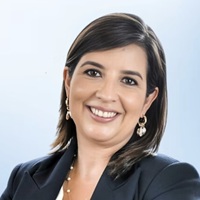


María Teresa Salazar de García, Global AML Program Manager at
Millicom (Tigo) in El Salvador discusses the evolving soft skills and leadership traits that today’s legal teams need.
There was a time when being a strong lawyer, AML, or compliance professional meant mastering the rules, applying frameworks, and mitigating risks with precision. Technical expertise was the currency of our profession, the foundation on which we built credibility and influence.
But the world has shifted dramatically. Organisations today face unprecedented complexity, pressure, and speed. In this landscape, our roles have evolved far beyond legal interpretation or regulatory alignment. We are no longer just advisors. We have become strategic business partners, integrators of ethics, navigators of ambiguity, influencers and increasingly, coaches!
This evolution isn’t accidental. It is the response to what modern organisations truly need: leaders who understand people as deeply as they understand laws. Professionals who can balance risk with opportunity, integrity with innovation, and compliance with business growth.
“The leaders of tomorrow will be those who help others learn to find the answers themselves.”
My own journey has taught me that technical expertise and skills may still open the door, but it’s our human-soft skills that keep us in the room. Soft skills are no longer ‘nice to have’ and they are not secondary. They are the backbone of modern leadership; they are the new core competency of all legal professionals. Because the truth is this: organisations do not only need lawyers or compliance officers. Today’s leaders must master the art of listening with intention, communicating with clarity, and influencing without imposing. We must develop the courage to initiate difficult conversations and the emotional intelligence to navigate them with empathy. We need to understand the motivations behind resistance, the fears behind silence, and the opportunities hidden in uncertainty.
And perhaps most importantly, we must embrace our role as ´coaches´, by developing talent, elevating voices, and empowering teams and colleagues to perform with integrity and confidence. In our profession, people often come to us for answers. But the leaders of tomorrow will be those who help others learn to find the answers themselves.
For me, this leadership transformation has been deeply personal. Being a spouse and a mother of four boys has taught me more about communication, patience, empathy, and resilience than any formal training ever could. These experiences have shaped how I show up as a leader, how I mentor, how I support, and how I influence. They remind me daily that leadership is not about controlling outcomes, but about cultivating environments where people can grow, thrive, and bring their best selves forward.
As legal, AML, and compliance professionals, we often stand at the intersection of ethics, business, and people. This gives us a unique vantage point, and also a unique responsibility. We don’t just protect organisations; we help shape their culture, their values, and their future.
The next chapter of our profession belongs to those who can blend expertise with humanity, clarity with compassion, and strategy with purpose. Because the leaders who will make the greatest impact are not those who know the most, but those who help others become more!
Be part of a growing global community committed to advancing in-house legal leadership.
In the final part of our series, 9 Lessons GCs Wish They’d Known Earlier, we explore perhaps the most enduring lesson of all: the true...
Learn more about Part 9 of 9: Lessons GCs wish they’d known earlier
In Part 8 of our series, 9 Lessons GCs Wish They’d Known Earlier, we explore one principle that consistently emerged from legal leaders around the...
Learn more about Part 8 of 9: Lessons GCs wish they’d known earlier